



Durability & Stability
Gold has always been considered valuable and has been serving as a store of value for over 3,000 years. Because of its durability and stability in times of crisis, it is an important element in every investment portfolio.
As in any other area of investment, you can and should also diversify when investing in precious metals. Apart from gold you can also invest in silver, white metals (platinum and palladium), technology metals and diamonds.
Gold Standard & Fiat Currencies
“If you don’t own gold, you know neither history nor economics.” - US entrepreneur Ray Dalio
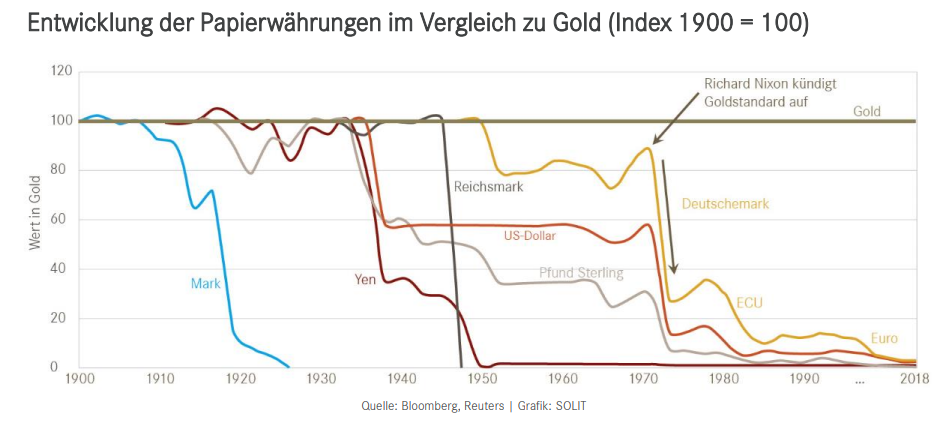
The end of the gold standard in 1971 had a massive impact on the value of fiat currencies and banknotes. This is demonstrated particularly well in the graph below.
 Source: SOLIT Management GmbH
In the period from 1940 to 1971, the US dollar’s value was relatively constant. The reason for this was the gold standard, which ensured that the dollar was backed by gold in the US state gold reserve and only a certain amount of dollars could be printed.
The US was in the position to do this because they had large gold reserves due to their selling of weapons in the Second World War. In the following years, one could exchange 35 US dollars for one ounce of gold. After the war, the US invested heavily in armament and research programmes, like the moon landing, and paid other countries in dollars they could exchange for gold.
Because of this, the US gold reserves diminished while state deficit increased. In 1971 US President Nixon officially abandoned the gold standard, which made it possible to print dollars as needed, irrespective of the gold reserves. The graph above shows the US dollar’s decline in value following this decision. Other countries saw themselves unable to turn the tide on this, as they had previously amassed huge amounts of US dollars and therefore could not afford a complete collapse of this currency,
The graph also shows that every past currency has collapsed at some point. Fiat currencies are constantly losing value; the euro, of course, is no exception.
When the Euro was introduced in 2003, ECB’s total assets were at one billion eros. By the beginning of 2020 they had risen to €4,5 billion, and after the Covid-19 pandemic in 2023 they amounted to about €8 billion. In comparison to 2003, the amount of money in circulation is eight times as big. This inevitably has an impact on inflation and the loss of purchasing power. Gold’s value, in contrast, remains constant. Important note: Gold’s value does not increase; gold holds its value.
Apart from this, pilot projects for Central Bank Digital Currency (CBDC) are launching worldwide. We might already be able to see the effects of centrally controlled digital currencies in a few years’ time.